
Stillwater Tactics
Read the water. Commit to the cast.
- Players
- 2–4
- Minutes
- 40–50
- Age guide
- 12+
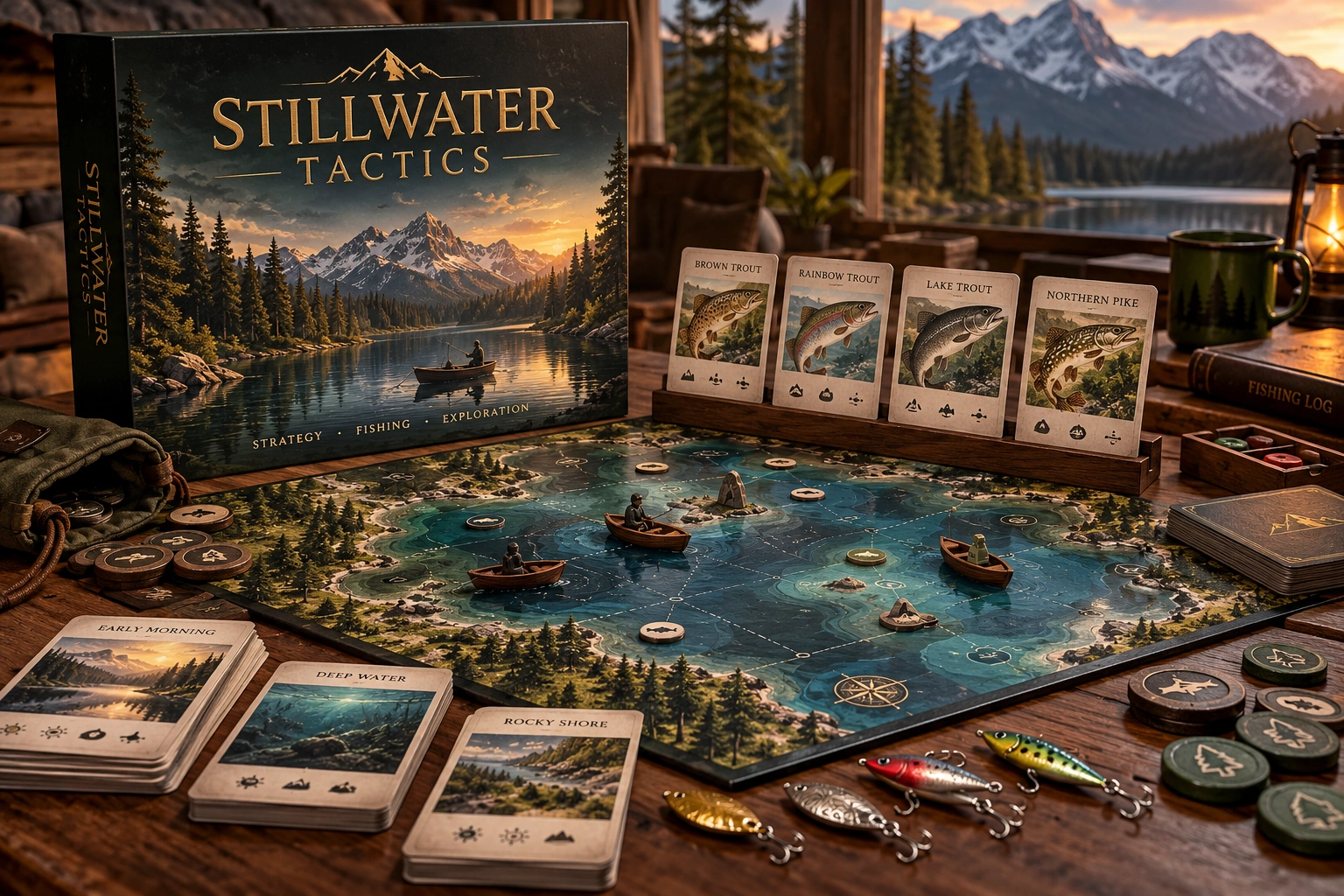
A good fishing spot is only valuable if you arrive with the right plan. Stillwater Tactics makes the lake a shared strategic space, where depth, weather and tackle all affect the value of a cast. You can follow the obvious catch or prepare for a quieter opportunity.
Limited actions make wasted movement expensive. The game rewards reading the common information and committing at the right moment, rather than collecting the most equipment.
Component inventory
- Alpine lake board
- Wooden boats
- Fish and tackle cards
- Lure tokens
- Condition cards
- Printed rules
Sequence of decisions
Survey the lake
Read the conditions and identify a productive zone.
Commit your tackle
Choose the card combination that supports your intended catch.
Land and reposition
Bank a successful catch, then consider where the next round will be strongest.
Position is valuable when it supports an action.
An attractive zone can pull your attention away from the cost of reaching it. Read the condition card, inspect your tackle and trace what you could actually do after moving. The comparison is between viable sequences, rather than between two isolated fishing spots.
Prepare the common information
This edition fits players who enjoy considering conditions before committing limited actions. Set out the lake and the relevant cards so their relationship is easy to see. For an economy focused on maintaining a reserve, examine Auric Exchange; for solitary route planning, examine Meridian Lines.
Three systems. Three forms of commitment.Player observations
Describe the decisions that matter, rather than the result alone. These are unverified visitor assessments and should be read in that context.